Supporting biodiversity monitoring skills in Indonesia
A packed four days in Ketapang, West Kalimantan, marked an important milestone for PV Nature, as partners from across Indonesia gathered to strengthen biodiversity monitoring and data collection skills.
Led by the PV Nature team, Terita Deare and Harry Tittensor, the Biodiversity Data Collection Training Workshop brought together representatives from the Pematang Gadung Community Peatland Conservation and Restoration Project, the Konda Forest Project, all part of the PV Nature pipeline.
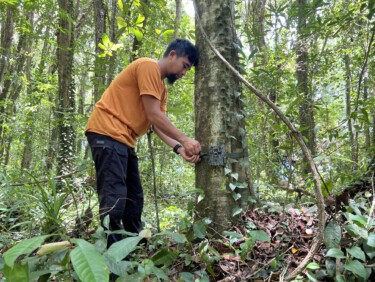
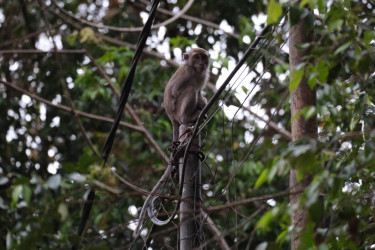
Hosted at the Yayasan Inisiasi Alam Rehabilitasi Indonesia (YIARI) Learning Centre in Ketapang, the workshop combined theoretical learning with practical field deployments, including hands-on biodiversity monitoring in the peatland forests of Pematang Gadung, and even a visit from a troop of long-tailed macaques.
Participants explored the theory and protocols of the PV Nature methodology, including biodiversity data collection, digital monitoring tools, data management, and transfer. Practical sessions included the deployment of passive devices such as camera traps and AudioMoths, alongside active data collection methods using smartphones and quadrats. These exercises deepened understanding of PV Nature’s monitoring methodology and certification requirements, while promoting peer learning among partners and local stakeholders.
The training was facilitated by the Royal Botanic Garden Edinburgh (RBGE) supported by The Global Centre on Biodiversity for Climate (GCBC) and part of a larger project — Benefits of Biodiverse Restoration for Ecosystems and Livelihoods in Borneo (BREL-Borneo).
The training included a representative from biometrio.earth, a recently accepted PV Nature Data Analytics Provider. As an approved provider, biometrio joins a growing network of third-party providers who bring innovative digital tools and analytics to enhance transparency, quality, and comparability of biodiversity data across PV Nature projects.

Building local capacity in biodiversity data collection and management is central to PV Nature’s participatory, community-driven approach to conservation and restoration. By equipping partners and local project teams with the tools and training needed to collect and interpret biodiversity data, PV Nature helps ensure that projects deliver measurable, lasting benefits.
The workshop reaffirmed that the PV Nature methodology enables communities to collect the required data for the issuance of Plan Vivo Biodiversity Certificates (PVBCs). This is crucial as PV Nature projects are designed to be managed by the Indigenous Peoples and Local Communities (IP&LCs) who call these landscapes home.
PVBCs provide a sustainable financial mechanism for conservation action delivered by communities across a diverse range of ecosystems worldwide. This incentivises nature positive action while ensuring IP&LCs maintain control over their landscape’s future.
Plan Vivo extends warm thanks to YIARI, the LPHD (The Village Forest Management Agency), biometrio.earth, Konservasi Indonesia, GCBC, and Mark Hughes from the Royal Botanic Garden Edinburgh for their invaluable support in making this workshop a success.