Plan Vivo Assessment in Progress for ICVCM CCP-Eligibility
Plan Vivo has applied to the Integrity Council for the Voluntary Carbon Market (ICVCM) for approval under its Core Carbon Principles (CCPs).
Plan Vivo is currently under assessment by the Integrity Council for the Voluntary Carbon Market (ICVCM) to become a Core Carbon Principle (CCP) Eligible Programme.
Developed with input from hundreds of organisations, the CCPs set a global benchmark for high-integrity carbon credits in the Voluntary Carbon Market (VCM). If successful, projects certified under the Plan Vivo Carbon Standard (PV Climate V5) using specific methodologies would be eligible to label their Plan Vivo Certificates (PVCs) as CCP-Eligible.
Plan Vivo’s application demonstrates a long-standing commitment to ensuring integrity. Over the past 27 years, Plan Vivo has strived for continued best practice and improvement, while advocating a community-centred approach that ensures fair and equitable climate finance is delivered to those who need it most.
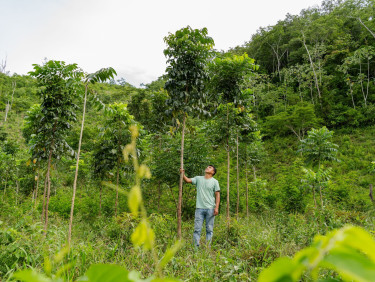
Plan Vivo now operates a portfolio of 31 certified projects, spanning 32 countries and works with more than 1,700 communities globally. PV Climate provides a mechanism for smallholder farmers, Indigenous Peoples, and local communities to access climate finance. It is the only Carbon Standard with an equitable benefit-sharing mechanism that ensures at least 60% of the PVC revenue goes directly to the local communities, smallholders, and Indigenous Peoples on the ground.
Plan Vivo has always placed quality, integrity, a participatory approach, and equitable benefit-sharing as our top priorities. We see ICVCM as a key driver of ‘VCM 2.0’, where high integrity for all actors in the value chain is expected and rewarded. This is key to restoring and building market confidence. The Core Carbon Principles resonate with our approach. Not only do they cover essential criteria for emissions impact (e.g., additionality and quantification) but also broader criteria that are key for high integrity, such as transparency and sustainable development benefits.
The ICVCM’s Assessment Framework requires applicants to meet stringent CCP criteria, including effective governance, tracking, transparency, and robust independent third-party validation and verification.
Plan Vivo must further demonstrate:
- Rigorous quantification of emissions reductions
- Prevention of double counting
- Sustainable development outcomes with safeguards
CCP status provides an opportunity to enhance trust, standardisation, and integrity within the VCM. This will allow the market to scale — fostering greater investment in crucial initiatives that mitigate climate change, protect and restore biodiversity, and support the development of alternative and sustainable livelihoods for marginalised communities.
These principles are central to the Plan Vivo ethos, which advocates a holistic approach to carbon crediting that creates real impact for nature, climate and communities.
Plan Vivo’s assessment for CCP-Eligibility is currently in progress. The outcome will be publicly available on the ICVCM website in due course.
About ICVCM & the Core Carbon Principles (CCPs):
The Integrity Council for the Voluntary Carbon Market (ICVCM) is multi stakeholder-led independent governance body. It establishes and maintains the highest standards of ethics, sustainability, and transparency for the global voluntary carbon market. The ICVCM enables a high-integrity voluntary carbon market that contributes to the goals of the Paris Agreement and the UN’s Sustainable Development Goals (SDGs) by setting and enforcing a global benchmark for high-quality carbon credits — the Core Carbon Principles.
The Core Carbon Principles (CCPs) are ten fundamental, science-based principles for identifying high-quality carbon credits that create real, verifiable climate impact. Developed with input from hundreds of organisations, they set a global benchmark for high integrity in the voluntary carbon market raising it to a consistent level of quality and ensuring it accelerates progress towards the 1.5°C target.