Biodiversity Credits: A Pioneering Way to Protect a Vital Marine Ecosystem
On the coast of Kenya, home to the pioneering Mikoko Pamoja and Vanga Blue Forest projects, the community are turning their hand to a new initiative; biodiversity credits*. For projects where carbon certification isn’t suitable, the voluntary biodiversity market provides a key opportunity to protect vital ecosystems, such as the seagrass meadows that the Vanga Seagrass Project seeks to conserve.
It is impossible to deny the importance of the ocean in sustaining the health of our planet and all living organisms. As David Attenborough proclaimed in his recent documentary (Ocean 2025),“We are at a crossroads, with humanity draining the life from the ocean.” We’re aware that marine species are in decline due to the destruction of crucial habitats such as mangroves and coral reefs and human activities like industrial overfishing. But there is less awareness around the innovative and pioneering solutions that exist to address these issues. They’re out there, and they need to be more widely discussed, promoted, and implemented.
Vanga and its origins: Carbon, communities and conservation
Fishing villages like Vanga, Jimbo, and Kiwegu, nestled on the Southern Kenyan coastline, have experienced these effects first hand. Dwindling fish stocks have impacted livelihoods in the region, leading some fishers to seek other sources of income, such as harvesting mangrove wood products. In an effort to revive the marine ecosystem and protect and restore their local mangrove forests, these coastal communities collaborated with the Kenya Forest Service (KFS), Kenya Marine and Fisheries Research Institute (KMFRI) and the Association for Coastal Ecosystem Services (ACES) to develop a project certified under Plan Vivo’s Carbon Standard (PV Climate).
With financial support from UNEP/GRID Arendal, GEF, the Leonardo DiCaprio Foundation, and Ecosystem Services for Poverty Alleviation, Vanga Blue Forest was born. The project achieved Plan Vivo certification in 2020 and works to protect 460ha of mangrove forest from deforestation, with 974 households participating in the project.
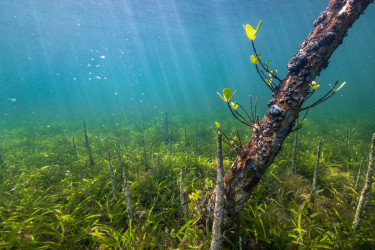
Vanga Blue Forest is a shining example of the transformative potential of marine carbon projects. The community has used proceeds raised through the sale of carbon credits to support education, purchase vital medical equipment for the health centre, and provide emergency relief to vulnerable groups during the COVID-19 pandemic period (to name a only a few). One of the previous project coordinators, Mwanarusi Mwafrica Salim, received a Neville Shulman Earthwatch Award in 2021 for her work on the project, and Vanga’s sister project, Mikoko Pamoja, has won both the 2017 Equator Prize and the 2023 UN in Kenya ‘Person of the Year’ award.
Vanga: A pioneering biodiversity credit project
After years of successful mangrove conservation and restoration, the community of Vanga Bay have been keen to protect vitally important seagrass meadows. ACES and the communities of Vanga Bay worked together to find ways to support seagrass conservation activities; this initial process led to the pioneering project to protect the seagrass meadows of Mwarembo-Spaki and Jibweni-Bazo in Vanga Bay.
Seagrass has been shown to store large amounts of carbon, with some estimates putting seagrass above some terrestrial forests in terms of carbon storage. Unfortunately, seagrass carbon sequestration is notoriously difficult to calculate (due to high variability between species and locations) and consequently PV Climate certification was not possible. This is not new to Plan Vivo. Many exceptional projects are not suited to carbon certification for eligibility reasons, despite doing great work. Plan Vivo has therefore been exploring alternative avenues for nature-based projects to access environmental markets. These avenues include ongoing research into ‘Climate Contributions’ and, of course, biodiversity credits, with the Plan Vivo Biodiversity Standard (PV Nature) officially launching in 2023. Two years on, the Standard boasts 10 pipeline projects and numerous ongoing eligibility checks, as well as interest from further conservation organisations and projects globally.
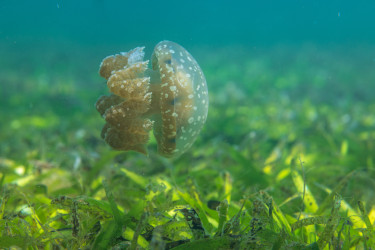
The Vanga Seagrass Project is at the forefront of innovation in the biodiversity market, finding new ways to channel ethical investment to local communities to incentivise the conservation and restoration of nature and biodiversity. Working with KMFRI, Kenya Fisheries Service (KeFS), the County Government of Kwale (CGK) and ACES, the communities of Vanga Bay joined PV Nature as one of a set of pilot projects collaborating in the development of the new Standard. The initiation of this project has been funded by Dona Bertarelli Philanthropy and the Ocean Risk and Resilience Action Alliance (ORRAA). The project is the first PV Nature project with an approved Project Idea Note (PIN), the first step on the pathway process to certification. The ACES team and the local partners are now working to align the project with the Kenyan policy framework as well as developing the Project Design Document (PDD), the final stage of the certification journey before third-party validation.
Certification under either of Plan Vivo’s Standards is no mean feat. It takes time, financial and expert backing, and real commitment and dedication from all involved. Amelia Allerton, a Project Officer at ACES, offered this advice to other project developers who might be considering PV Nature certification:
We thoroughly enjoyed the PIN process as it is a great exercise to start framing the project and work through how you are going to achieve project goals. It raised some challenges and made us think objectively about the project, overall strengthening our plans and uncovering new ideas. Our advice would be to not underestimate this step! PIN development is a big time investment, both with drafting the PIN and also working with the communities and engaging relevant stakeholders. It is a critical step to lay the groundwork for your project and a thorough PIN will pay off as you move onto the next steps in project development.
The importance of seagrass
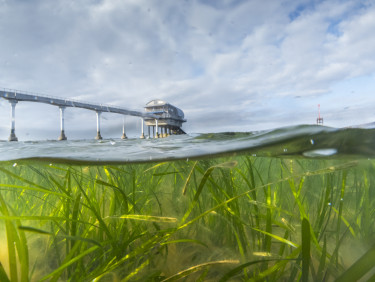
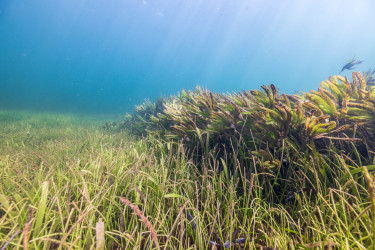
Seagrass is hugely valuable both for carbon storage and for biodiversity. Due to the variability of data between different habitats, over different time periods, and between lab- and field-based studies, measuring carbon storage is difficult. Monitoring is also complicated, given the marine location and the need to measure soils as well as the seagrass itself. In terms of biodiversity, seagrass is fascinating, being the only flowering plant that grows within the marine environment. Vanga Bay is also an incredibly important location in the context of seagrass, with the Zostera capensis (a species of dwarf eelgrass classified as Vulnerable on the IUCN Red List) known to be present in the area.
Its importance for the wider ecosystem is also crucial. Seagrass meadows provide a nursery ground for commercially and culturally important fish species, as well as other marine species. Charismatic species such as Green Turtle (Chelonia mydas; Endangered) and Dugong (Dugong dugon. Eastern African subpopulation; Critically Endangered) heavily rely on seagrass as they are both herbivores. The Vanga Seagrass project team would love to spot these species in the project areas in years to come. Another hope is to see the return of fish species that eat invertebrates, known as invertivorous fish. Currently sea urchins are overgrazing the seagrasses due to a lack of predators to keep them in check. The return of these species would be a good indicator that ecosystem balance is returning to Vanga Bay.
Collaborative and community-led decision making
Balance is also needed when it comes to fishing in the project areas. After a three-day consultation with local fisheries, led by KMFRI and with support from KeFS and Kwale County Government, the project established two Locally Managed Marine Areas (LMMAs). This totals 225ha of seagrass meadows under protection. Existing project interventions within these LMMAs include a 10-month closure to fishing and restrictions on damaging gear and techniques such as seine netting; the project is also in the process of establishing a patrol schedule to encourage compliance with these interventions. These patrols will be a collaborative effort between the project, the Beach Management Units and local fishers who will receive training and compensation for participating in the project and conducting patrols.
Decisions about the project are taken by a democratically elected committee, voted in by the community themselves with elections held in each of the four participating villages (Vanga, Jimbo, Jasini and Kiwegu). The committee stipulates representation from women, youth, people with a disability and fishers within it to ensure a wide demographic and a range of local needs are represented.
As the project aims to be certified through PV Nature, at least 60% of income from the sale of biodiversity credits will go to the local community. These funds can be used for community development projects. Proceeds from Vanga Blue Forest, the carbon project, for example, have been invested in medical supplies, school equipment, and restoring important local infrastructure – which are proposed and agreed upon during community-wide barazas. Furthermore, the community and especially the committee will be heavily involved in holding outreach and education campaigns, as well as biodiversity monitoring and reporting.
KMFRI’s involvement in the project is driven by its mandate to provide evidence-based information and knowledge for a sustainable blue economy. In addition, as the host-country partner institution, KMFRI not only ensures that the project is aligned to the national policy framework, but also receives support from the government and other key stakeholders.
Challenges and Opportunities
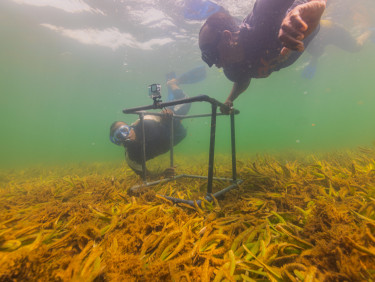
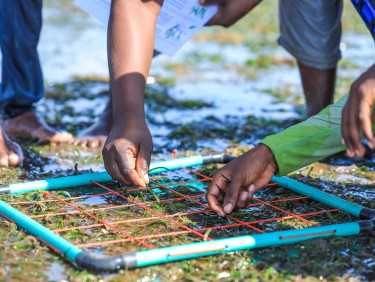
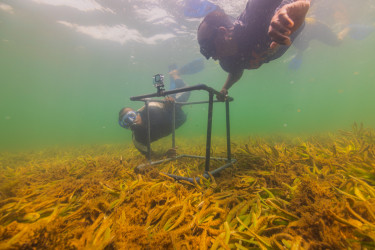
It is well known that community-led nature-based projects of this kind can come up against numerous challenges. For Vanga, seagrass biodiversity monitoring presents the biggest challenge. Monitoring marine ecosystems often requires costly specialist equipment for use underwater, as well as a high level of expertise, which has traditionally been a barrier. To balance meeting the requirements of PV Nature with biodiversity data collection that is cost-effective and accessible to community members, the project needs to innovate. ACES are collaborating with Plan Vivo, KMFRI and the wider project team to develop a fully-digital seagrass biodiversity monitoring protocol that strikes a balance between all of these elements, ensuring the protocol is accessible, replicable, reliable and can be audited by third parties.
Another challenge the project is hoping to overcome is finding sustainable long-term funding for seagrass conservation. With carbon finance out of reach due to the difficulties in calculating and monitoring seagrass carbon, finding alternative forms of funding is of vital importance. PV Nature certification and the sale of Plan Vivo Biodiversity Certificates (PVBCs) offers direct access to fair and equitable finance from responsible buyers and investors who are eager to be part of the Nature Positive movement.
As one of the first marine PV Nature pilot projects we have faced the challenge of applying the methodology in a marine environment, but this has been a welcome opportunity to apply our scientific expertise to a novel challenge. The Plan Vivo team offers an insightful review process and we are really happy with where the project is now.
PV Nature and the Biodiversity Market
With two certified PV Climate projects, Mikoko Pamoja and Vanga Blue Forest, the ACES team has a long history of working with Plan Vivo. This fruitful collaboration has been facilitated by alignment on key issues: a holistic approach, alongside a focus on poverty alleviation, community leadership and participatory approaches. These fundamental parts of the Plan Vivo model help projects to pre-empt risks and face challenges. Plan Vivo backing demonstrates that projects meet the highest quality standards and provide robust, independently verified credits with those all-important additional benefits. This provides that fundamental trust for buyers and investors of these pioneering community-led projects, who can be sure they are supporting high integrity initiatives working for the good of the community.
Besides this long-term partnership, the development of this new Standard offers an exciting opportunity to help shape the emerging biodiversity market, making sure that high-integrity and community-led approaches are (and continue to be) at the heart of biodiversity projects.
In addition, official recognition through PV Nature certification will boost local pride and a sense of ownership over conservation efforts, increasing the likelihood of sustained community involvement. Certification by a recognised and reputable organisation such as Plan Vivo validates a project’s claims, increasing trust among donors, investors, and policymakers.
Importantly, while biodiversity credits can channel finance to vital conservation projects, they should not commodify nature or allow for destruction of biodiversity elsewhere in the world. ACES emphasises the inherent value of nature, independent of corporations’ goals and targets. These biodiversity credits are not offsets, but rather, in line with the Nature Positive** movement, they aim to positively incentivise landowners and communities to conserve and restore important ecosystems that are critical for biodiversity and people to thrive.
At ACES, we are excited and honoured to be one of the first PV Nature projects under development. The PV Nature standard was the obvious choice for us as it embeds the highest integrity principles of project design including genuine community engagement and inclusion. We hope to see the biodiversity market opening channels of nature-based financing for coastal ecosystems that have typically been difficult to include under carbon financing, including seagrass meadows.
Looking to the future
In 10 years’ time, the team would love for the successful Vanga Seagrass Project to be a pioneer and a shining example for high-integrity marine conservation projects funded through the sale of biodiversity credits. Ideally, the project will lead to a systemic shift in the fishing practices in Vanga Bay and to an adoption of more sustainable fishing gear and methods – which will see currently declining fish stocks bounce back.
Building on the success of Mikoko Pamoja and Vanga Blue Forest as trailblazing community-led blue carbon projects, the project team aims to develop an innovative biodiversity initiative that centres the local community. Just as their blue carbon projects have inspired a global focus on mangrove restoration, the team aims for the learnings and expertise fostered through the Vanga Seagrass Project to be used worldwide, helping to achieve positive outcomes for vital marine ecosystems and the coastal communities protecting them.
ACES is honoured to work with such engaged, knowledgeable and skilled community groups who are driving these conservation initiatives forward, and hope that this novel project will give them the recognition that they deserve as marine conservation pioneers.
By leading the way in the emerging biodiversity market, the project team hopes to show that channelling finance through biodiversity credits can be a hugely successful means of supporting pioneering and necessary conservation initiatives, which may otherwise have struggled to get funding. Alongside the other PV Nature pipeline projects, Vanga Seagrass demonstrates that high-integrity and inherently complex projects – led by Indigenous Peoples and local communities – are not only possible but can deliver real impact and benefit.
*It is useful to note that Plan Vivo refers to its biodiversity credits as ‘biodiversity certificates’, however for the purposes of this blog we refer to them as ‘credits’ as this is the most widely used term. In this nascent biodiversity market space, the label biodiversity credit is often used to describe the units derived from monitoring a project’s biodiversity impact. However, PV Nature uses the label biodiversity certificates as it more encompasses the holistic impact achieved by our projects. Equally, the claims made through Plan Vivo biodiversity certificates (PVBCs) are framed as nature positive contributions, rather than being a compensatory mechanism.
**Plan Vivo defines ‘Nature Positive’ as: A movement aimed at making a positive (and measurable) contribution to reversing biodiversity loss and increasing the resilience of our planet and communities, by positively incentivising people (in particular IPLCs) to conserve and restore important and threatened species and ecosystems.
Author: Olivia Horne, Communications Officer